
Decision record01
First useful release
What should ship first, why it matters, and what waits until the signal is real.
We stay with a product, platform, internal system, or new venture from the first call through launch and early use. We help define what should ship, build the first version, and turn the first lessons into the next release.
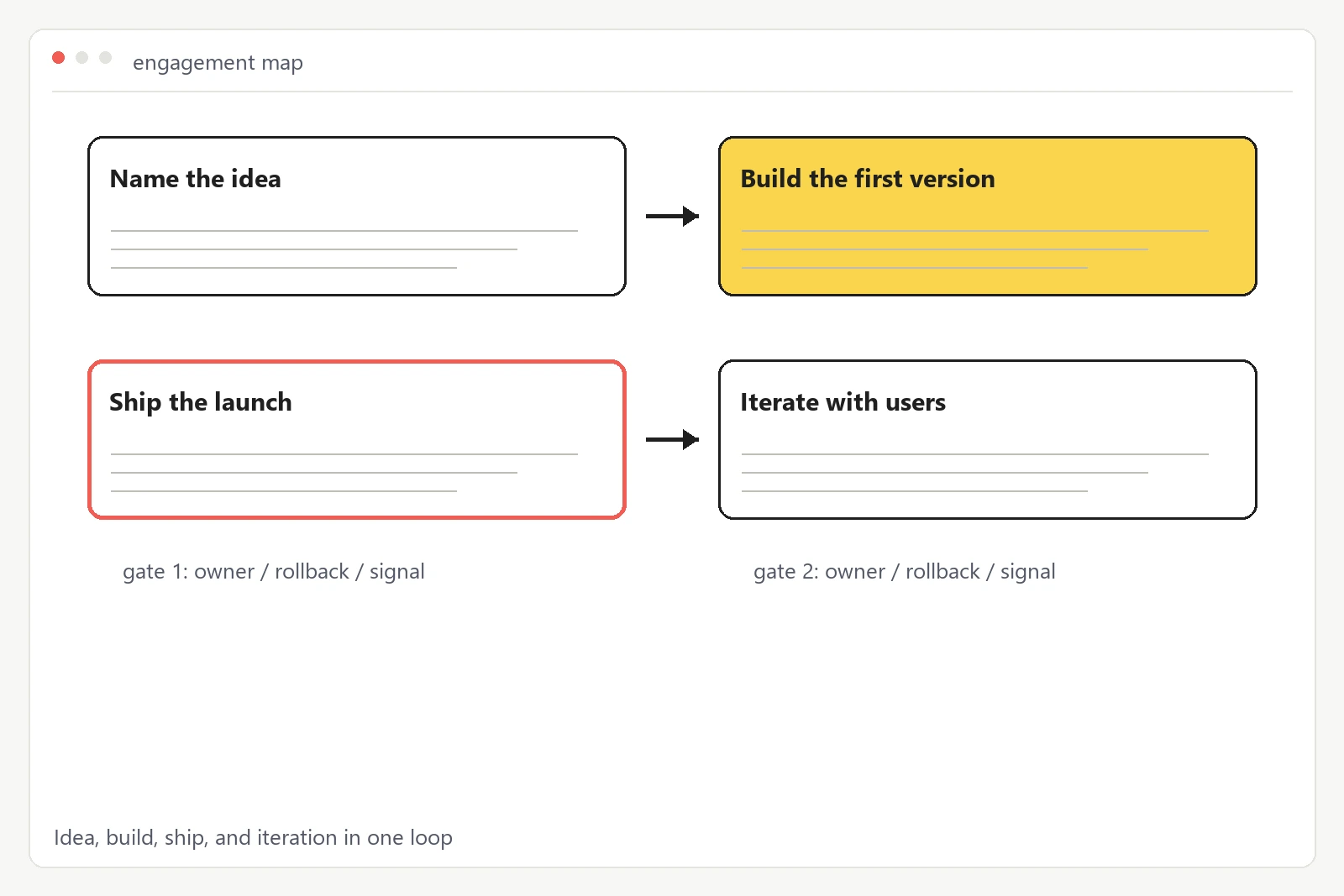
The best product teams show their work. We bring that same product discipline to build partnership: the decision record, the system map, the release runbook, and the learning loop stay close to the build from the first useful slice.
What should ship first, why it matters, and what waits until the signal is real.
The systems, teams, agents, and data paths that have to line up for launch.
Cutover steps, controls, rollback paths, and the people accountable for each gate.
Usage, support, and workflow signals become the next release decision.
Some teams need a product launched. Others need a workflow fixed, a platform modernized, AI put into production, or data rebuilt so the next decision is easier.
Solution Engineering turns the plan into integrations, workflow tools, service platforms, and release steps a team can run in production.
See how we do it02We build model-backed workflows with evaluation, observability, human review, and release discipline from day one.
See how we do it03Data Modernization builds the data layer that AI, reporting, product, and operations need to trust.
See how we do it04A compact product team handles discovery, design, engineering, release, and the first months after launch.
See how we do it05Modernization uses staged releases, adapter layers, controls, and migration paths led by people who have carried platform rewrites in production before.
See how we do itTell us what you are trying to build, what exists today, and where it is stuck. We will help name the first useful release and what needs to be true to ship it.
What we do first
How we can partner
The useful lessons are practical: policy rules, platform seams, data dependencies, controls, and the release path all have to be understood before the build can move well.
That experience helps us ask better questions earlier, especially when the work touches real workflows, legacy systems, and teams that have to keep operating while the new thing ships.

The proof is public: live products, system plans, and tools you can inspect. Some work is live. Some is a public plan or repository. Either way, you can see what was actually made. No gated summary PDFs behind email walls. No anonymous case studies.
This is not the full body of work. It is a public sample of the kinds of products, systems, and build plans we can help bring into the world.

A live coaching platform for branded portals, service setup, coach coordination, and client workflows.

An analytics build plan with architecture, data models, integration guidance, and delivery specs in one place.

A repeatable setup for shared agent skills across coding agents and repositories.

An insurance site plan built around clear content, accessible design, and a quote flow people can trust.